Encinitas occupies a stretch of the North San Diego County coast where the mild Mediterranean climate, coastal humidity, dense mature landscaping, and year-round warmth create a pest environment that never shuts down. If you own a home here—whether in Old Encinitas, Leucadia, Cardiff-by-the-Sea, or Olivenhain—the pests you encounter are shaped by this specific combination of conditions. Here are the species that Encinitas homeowners deal with most frequently and what drives each one.
Termites: The Dominant Structural Threat
Termites are the single most consequential pest in Encinitas, and two species are active in the area:
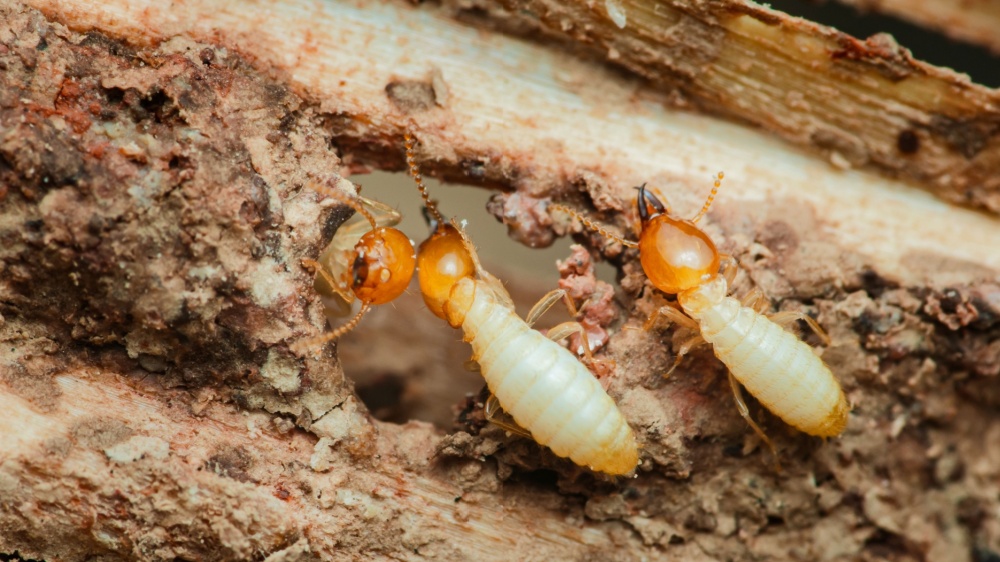
Drywood termites infest wood directly from the air. A mated pair of winged reproductives (called swarmers or alates) lands on an exposed wood surface, bores in, seals the entrance, and begins building a colony inside the wood. They do not need soil contact. They do not build mud tubes. The colony develops entirely inside the wood member—eaves, fascia, window frames, door trim, attic rafters, and structural framing are all potential targets. Drywood termites are particularly prevalent in coastal Encinitas because the mild, warm year-round temperatures allow continuous colony growth, and the older wood-frame homes common in many Encinitas neighborhoods provide abundant habitat.
The first visible sign of a drywood termite infestation is often small, hard, pellet-shaped frass (droppings) found on windowsills, on floors beneath wood trim, or on surfaces below infested wood. The termites push frass out of the colony through small “kick-out” holes. By the time frass is visible, the colony has been established and feeding for months or years.
Subterranean termites live in the soil and access wood through mud tubes built from the ground to the wood surface. They are present throughout San Diego County and are responsible for more total termite damage statewide than drywood termites. Homes with wood-to-soil contact, moisture issues near the foundation, or inadequate clearance between soil and structural wood are most vulnerable.
Both species require professional inspection, identification, and treatment. Annual termite inspections are strongly recommended for every Encinitas home.
Argentine Ants
Argentine ants are the dominant ant species across coastal Southern California and the most common insect pest in Encinitas homes. They form massive supercolonies with multiple queens, nest in moist soil near foundations, under hardscaping, and in planting beds, and send persistent foraging trails into homes in search of food and water.
Argentine ant activity is year-round in Encinitas. Trails tend to intensify during dry periods—when outdoor moisture decreases, the ants seek water sources inside homes. They also surge during the occasional heavy rain events that saturate soil and displace shallow nesting sites.
Spiders
Several spider species are common in Encinitas:
- Black widow spiders: The most medically significant spider in coastal San Diego County. Found in garages, meter boxes, under outdoor furniture, in block wall crevices, in woodpiles, and in sheltered exterior locations. Their venom is a neurotoxin that can cause significant symptoms.
- Cellar spiders: Long-legged, web-building spiders commonly found in garages, basements, closets, and undisturbed corners. Not dangerous, but their webs accumulate quickly.
- Common house spiders and orb weavers: Found on exterior walls, around lighting, and in landscaping. Their populations track with the overall insect activity on the property.
Cockroaches
Encinitas homeowners encounter several cockroach species:
- Oriental cockroaches: Dark, moisture-dependent, commonly found in garages, around irrigation boxes, and in the damp areas near the foundation. They enter through drains, foundation gaps, and ground-level openings.
- American cockroaches: Large, reddish-brown, associated with sewer systems and exterior harborage. They fly on warm evenings and often enter through open doors and windows.
- German cockroaches: Small, fast-breeding, and the most difficult species to eliminate. Primarily an indoor pest found in kitchens and bathrooms. Requires aggressive professional treatment.
Rodents
- Roof rats are the primary rodent concern in Encinitas. The coastal neighborhoods with mature trees, dense vegetation, fruit trees (citrus, avocado), and ivy ground cover provide ideal habitat. Roof rats are agile climbers that access homes through tree branches contacting the roofline, gaps in eaves, and openings around attic vents and utility penetrations. They nest in attics, wall voids, and dense exterior vegetation.
- House mice are also present, particularly in homes with attached garages and storage areas where gaps provide easy entry.
Both species contaminate food, damage wiring and insulation, and spread disease through droppings and urine.
Bees
Africanized honeybees are established in San Diego County and can be aggressive when their colony is disturbed. Bee swarms and established hives in wall voids, eaves, and landscape features are common enough in Encinitas that professional removal is a regular service need. Bee control requires specialized handling—not a general pest spray.
Fleas
The mild, year-round climate in Encinitas supports flea activity in every month. Homes with pets are most vulnerable, but wildlife—opossums, raccoons, and feral cats—also introduce fleas to residential properties. Flea infestations can develop quickly indoors, particularly in carpeted homes.
Why Year-Round Protection Matters
The common thread across every pest category in Encinitas is that the mild coastal climate eliminates the natural winter reset that colder regions rely on. Termite colonies grow year-round. Ant super colonies are active in every season. Spiders, cockroaches, and rodents never experience the deep-freeze mortality that reduces their populations elsewhere. Professional pest management that maintains consistent protection across all twelve months is how Encinitas homeowners keep these species managed.
If you want to know what pests are active in your Encinitas home, contact Kennedy Pest Control for a free inspection.