Coastal California homeowners face a termite challenge that most of the country does not—two distinct termite species, each with different biology, different behaviors, and different treatment requirements, both active on the same properties year-round. Understanding the difference between drywood and subterranean termites is not academic. It directly affects how your home is inspected, how an infestation is treated, and how much that treatment costs. Here is what every homeowner in coastal San Diego County needs to know about these two species.
Where They Live
This is the most fundamental difference between the two species, and it determines everything else—how they get into your home, how they are detected, and how they are treated.
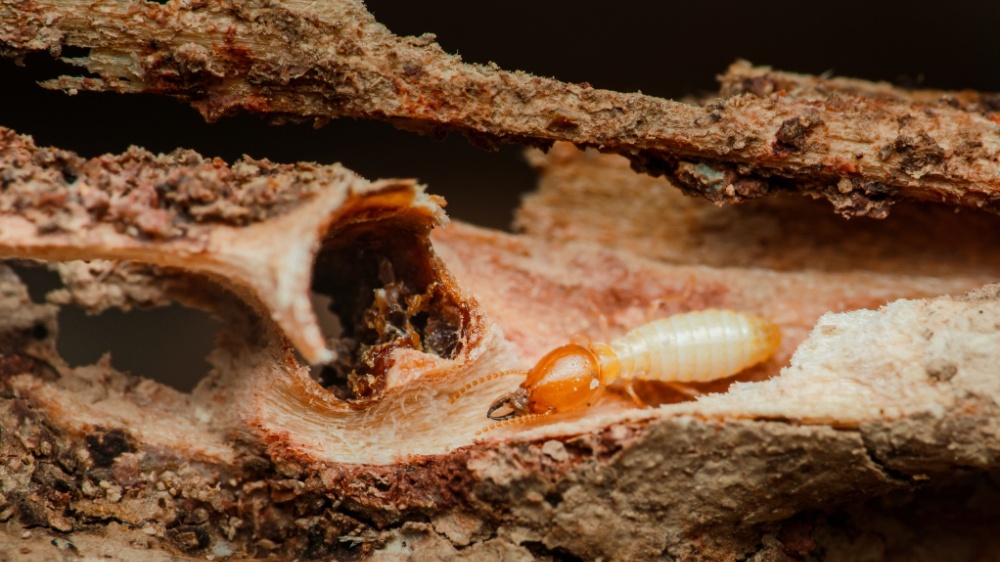
Drywood termites live inside the wood they consume. A mated pair of swarmers lands on an exposed wood surface, bores in, seals the entry behind them, and builds a colony entirely within the wood member. They do not need soil contact. They do not build mud tubes. They do not require an external moisture source—they extract the moisture they need from the wood itself. The colony grows slowly but can eventually consume significant volumes of wood from the inside out.
Subterranean termites live in the soil. They build their colonies underground and access wood in structures through mud tubes—pencil-width tunnels constructed from soil, saliva, and fecal material that bridge the gap between the ground and the wood. Subterranean termites require constant contact with soil moisture to survive. They cannot establish a colony inside wood that is disconnected from the ground unless an alternative moisture source is present.
How They Get Into Your Home
Drywood termites enter from the air. During swarming season—typically September and October in San Diego County, though timing varies—winged reproductives leave mature colonies and fly to exposed wood surfaces. Any unprotected wood on the exterior of your home is a potential entry point: eaves, fascia, window frames, door frames, exposed rafters, siding, and trim. Homes near the coast, where salt air accelerates wood weathering and creates the rough, porous surfaces that swarmers prefer, are particularly vulnerable.
Subterranean termites enter from the ground. They build mud tubes up the foundation wall, along piers, through cracks in concrete, and along plumbing penetrations that connect the soil to the structure. Any point where wood contacts or comes near the soil—porch posts, siding that extends below grade, form boards left in place after construction—provides a direct pathway. The colonies can be massive, with populations in the hundreds of thousands, and they can access wood at multiple entry points simultaneously.
How They Are Detected
Drywood termite detection relies primarily on finding frass—small, hard, pellet-shaped droppings that the termites push out of the colony through tiny kick-out holes in the wood surface. Frass piles on windowsills, on floors beneath trim, or on horizontal surfaces below infested wood are the most common early sign. Other indicators include shed swarmer wings near windows and lights, hollow-sounding wood when tapped, and visible exit holes where swarmers emerged.
Because drywood termites live entirely inside the wood, detection can be difficult until the colony has been established long enough to produce visible frass or swarmers—often several years.
Subterranean termite detection is often easier because the mud tubes that connect the soil to the structure are visible on foundation walls, piers, and plumbing penetrations. Mud tubes on the exterior or interior of the foundation are a clear sign of active or recent subterranean termite activity. Other signs include soft or water-damaged-looking wood near the soil line (without an obvious moisture source), swarmers emerging from the soil near the foundation, and dirt-filled galleries inside damaged wood.
How They Are Treated
This is where the species distinction matters most to your wallet and your decision-making.
Drywood termite treatment options:
- Spot treatment: Product is applied directly to the infested wood through drilled holes or injection ports. Effective for localized infestations in accessible areas. Least expensive option. Does not treat colonies in inaccessible locations.
- Heat treatment: The infested area is heated to temperatures lethal to termites (120–140°F in the wood). Kills all life stages, including eggs. No chemical residue. Effective for defined areas or sections of the home. More expensive than spot treatment but less expensive than fumigation.
- Fumigation: The entire structure is tented, and a gas fumigant penetrates all wood in the home. The most comprehensive treatment option, appropriate for widespread infestations or when colonies are in inaccessible locations. Most expensive. Requires vacating the home for two to three days.
Subterranean termite treatment options:
- Liquid soil barrier: Termiticide is applied to the soil around the foundation, creating a treated zone that kills termites passing through it. The barrier prevents subterranean termites from accessing the structure through the soil.
- Bait stations: Monitoring stations installed in the soil around the perimeter. Termites that feed on the bait carry the active ingredient back to the colony, which eliminates the colony over time. Requires ongoing monitoring.
A property can have both drywood and subterranean termites simultaneously—and in coastal San Diego County, this is not uncommon. Treatment for one species does not address the other. A professional inspection that identifies which species is present (or confirms both) is essential before any treatment recommendation is made.
Why Coastal Properties Face Higher Risk
Both termite species are more active in coastal California than in most other parts of the country:
- The mild, stable year-round temperatures support continuous colony growth for both species—no winter dormancy, no seasonal reduction
- The marine influence maintains wood moisture levels near the coast that are favorable for drywood termite entry and establishment
- Salt air accelerates weathering of exterior wood, creating entry points for drywood swarmers
- Irrigated landscaping near the foundation maintains the soil moisture that subterranean termites depend on
- Older wood-frame construction common in established coastal neighborhoods has had more years of exposure to both species
What Homeowners Should Do
- Schedule annual termite inspections: Professional inspection by a licensed inspector is the most reliable method for detecting both species early. Early detection means simpler, less expensive treatment.
- Maintain exterior wood: Keep paint and sealant intact on all exposed wood surfaces. Replace damaged trim promptly. Reduce the rough, weathered surfaces that drywood swarmers prefer.
- Reduce soil-to-wood contact: Maintain clearance between soil and structural wood around the foundation. Remove form boards and debris from crawl spaces. Keep mulch pulled back from the foundation.
- Monitor for signs: Check windowsills for frass. Check foundation walls for mud tubes. Report anything suspicious to your pest control provider promptly.
If your coastal California home has not been inspected for termites recently—or if you have found signs that concern you—contact Kennedy Pest Control for a free inspection.