
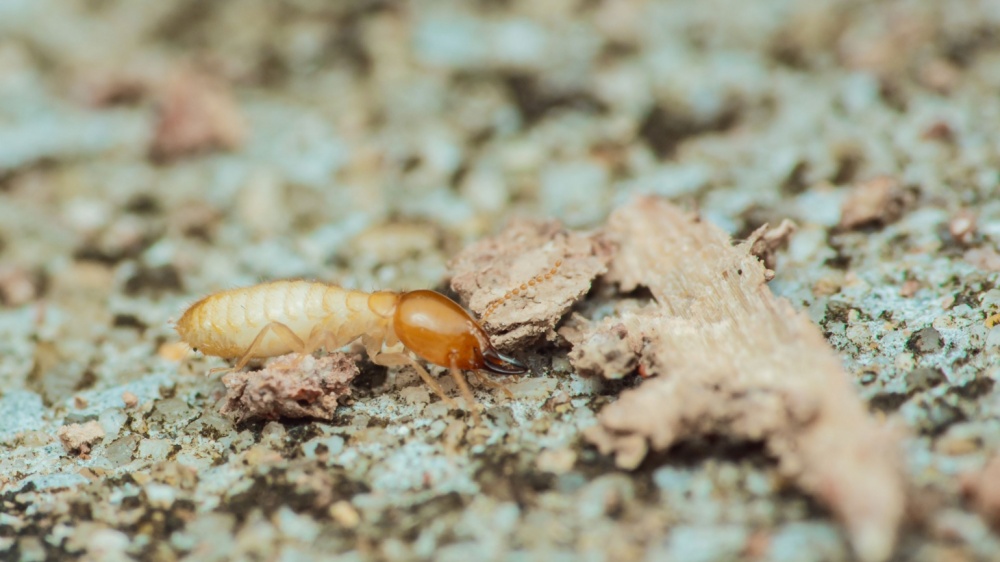
Most Southern California homeowners have heard of termites, know they damage wood, and understand that treatment can be expensive. What many homeowners cannot do is identify a termite when they see one—or distinguish a termite from an ant, which is the most common misidentification. Knowing what termites actually look like and where to find the early signs of their activity gives you the best chance of catching an infestation before it becomes a major structural and financial problem.
What Termites Look Like—By Type
Drywood termite swarmers—the winged reproductives that leave mature colonies to mate and establish new infestations—are the termites homeowners are most likely to encounter in Southern California. They are roughly 3/8 to 1/2 inch long, including wings. Their bodies are typically light brown to dark brown. They have two pairs of wings that are roughly equal in length and extend well beyond the body. After landing and mating, they shed their wings—the discarded wings are often the first thing homeowners notice, found on windowsills, near exterior lights, and along baseboards.
Drywood termite workers are rarely seen because they live entirely inside the wood they are consuming. If you break open a piece of infested wood, the workers are small (roughly 1/4 inch), soft-bodied, pale or cream-colored, and wingless. You are unlikely to encounter them unless wood is removed during construction, repair, or inspection.
Subterranean termite swarmers are similar in size to drywood swarmers but are typically darker—dark brown to black—with wings that are also roughly equal in length. In San Diego County, subterranean swarmers typically emerge in late winter through spring, often after rain events. They may be found indoors near baseboards and windows or outdoors near the foundation.
Subterranean termite workers are also small, pale, and soft-bodied. They are found inside mud tubes and in the wood they are consuming. Like drywood workers, they are rarely seen unless their habitat is disturbed.
Termite vs. Ant: How to Tell the Difference
This is the most important identification skill for Southern California homeowners, because termite swarmers and flying ants emerge at similar times of year and look superficially similar. The differences are clear once you know what to look for:
- Body shape: Termites have a broad, straight-sided body with no visible waist—the midsection connects to the abdomen without a pinch. Ants have a distinctly narrow, pinched waist between the thorax and abdomen.
- Wings: Termite swarmers have two pairs of wings that are roughly equal in length and extend well beyond the body. Ant swarmers have two pairs of wings, where the front pair is noticeably longer than the back pair.
- Antennae: Termite antennae are straight and beaded—like a string of small pearls. Ant antennae are bent or elbowed at roughly a 90-degree angle.
If you find winged insects in your home and are not sure whether they are termites or ants, capture one (or photograph it clearly) and contact a professional for identification. The treatment strategies for termites and ants are completely different, and misidentifying the pest leads to the wrong approach and continued damage.
Where to Look for Early Signs
Rather than waiting to see a live termite—which is difficult since workers stay hidden and swarmers appear only briefly—train yourself to look for the indirect signs of termite activity:
- Frass pellets: Small, hard, sand-grain-sized droppings pushed out of drywood termite kick-out holes. Found on windowsills, floors, shelves, and surfaces beneath infested wood. The most reliable early indicator of drywood termite activity.
- Shed wings: Discarded after swarmers land and mate. Found on windowsills, in light fixtures, near exterior doors, and along baseboards. Shed wings indicate a mature colony in or near the home.
- Mud tubes: Pencil-width tunnels on foundation walls, piers, plumbing penetrations, and any surface connecting soil to wood. The signature sign of subterranean termite activity.
- Damaged or hollow wood: Wood that sounds hollow when tapped, blisters or darkens on the surface, or crumbles when probed may have active or historic termite damage.
- Exit holes: Small, round holes in wood surfaces (roughly the size of a BB) where swarmers emerged from the colony. Often sealed with a material that matches the wood color.
When Swarming Occurs in Southern California
Drywood termite swarming in San Diego County typically peaks in September and October, though it can occur at other times depending on temperature and humidity conditions. Swarmers are attracted to light and often appear near windows and exterior lighting in the evening.
Subterranean termite swarming typically occurs in late winter through spring, often triggered by warm, humid conditions following rain.
Finding swarmers inside your home is a significant indicator that a colony is present in the structure. Finding them outside near the home means colonies are present in the area, and your home is at risk for new infestation. Either situation warrants a professional inspection.
What to Do
If you find any of these signs—frass, shed wings, mud tubes, damaged wood, or live swarmers—schedule a professional termite inspection. Do not attempt DIY treatment. Termites require professional identification of the species, professional assessment of the infestation’s scope, and professional treatment methods that consumer products cannot provide.
If you have seen something in your home that might be termite-related—or if your home has not been inspected recently—contact Kennedy Pest Control for a free inspection.


