Encinitas is the kind of place where people spend a lot of time outdoors—and where the line between indoor and outdoor living is thinner than in most parts of the country. Open windows, sliding doors, landscaped yards that blend into the home’s living space, and a climate that never gets cold enough to shut pests down. That combination means the pest pressures on Encinitas homes are constant, and the question of whether you can manage them with consumer products from the hardware store has a more definitive answer here than in markets where winter provides a natural reset.
What Consumer Products Can Handle
A single ant trailing across the counter toward a crumb. A cobweb in the garage corner. A lone cockroach that wandered in through an open door on a warm evening. For isolated, one-time encounters like these, a consumer product is a reasonable response. No argument.
Where DIY Stops Working in Coastal North County
The pest environment in Encinitas is shaped by two factors that make consumer products inadequate for anything beyond minor encounters: the climate never shuts pest populations down, and the species that dominate this area require professional-grade strategies to control.
Argentine ants. This is the ant species that runs Southern California, and it is the species behind nearly every ant trail in an Encinitas kitchen. Argentine ants form super colonies—interconnected networks of nests with multiple queens that span multiple properties and can contain millions of individuals. Spraying a trail with a consumer repellent product does not reduce the colony. It causes the ants to detect the chemical residue, abandon the treated area, and establish new entry points into your home. With a multi-queen species like Argentine ants, repellent exposure can trigger colony fragmentation, creating more nesting sites rather than fewer. Consumer sprays make Argentine ant problems worse, not better.
Drywood termites. This is the pest that separates coastal Southern California from most other markets. Drywood termites infest wood directly from the air—they do not need soil contact the way subterranean termites do. They fly to exposed wood, bore in, and establish colonies inside the wood itself. The mild, warm coastal climate allows drywood termites to remain active year-round, and Encinitas homes—particularly older wood-frame construction—are vulnerable to infestation at every exposed wood surface: eaves, fascia, window frames, door frames, siding, and attic framing. There is no consumer product that addresses an active drywood termite infestation. Detection requires professional inspection, and treatment requires professional methods—spot treatment, heat treatment, or fumigation depending on the scope and location of the infestation.
Roof rats. Encinitas neighborhoods with mature trees, dense landscaping, and fruit-bearing plants (citrus, avocado, and palms) provide ideal habitat for roof rats. These are climbers that access homes from above—through tree branches contacting the roofline, gaps in eaves, and openings around attic vents. A few snap traps in the attic may catch an individual, but they do not identify how rats are getting in, seal the entry points, or address the population living in the trees and vegetation on the property. Professional rodent control combines trapping, exclusion, and ongoing monitoring.
Year-round pest activity. Encinitas rarely drops below 45 degrees in winter, and the coastal marine layer maintains humidity that supports pest populations through every month of the year. There is no seasonal die-off. There is no hard freeze that resets ant colonies, eliminates termite activity, or reduces spider populations. The pest pressure in January is lower than in August, but it never stops—and the barrier that protects your home needs to be maintained continuously.
What Professional Service Provides That DIY Cannot
Non-repellent colony-elimination products for ants that foragers carry back to the colony, spreading through the population and reaching the queen. This is the only reliable method for eliminating Argentine ant colonies, and it is not available in consumer form.
Professional termite inspection and treatment. Drywood termite infestations are often invisible until significant damage has occurred. A licensed inspector knows where to look, what the signs are (frass pellets, kick-out holes, hollow-sounding wood), and what treatment method is appropriate for the specific situation. Kennedy Pest Control has been providing termite inspections and treatment across San Diego County since 1986—nearly four decades of experience identifying and resolving termite issues in coastal construction.
A sustained exterior barrier formulated to maintain effectiveness in Encinitas’s coastal conditions—not a consumer spray that degrades within hours.
Recurring service that maintains protection year-round, adjusts to seasonal changes, and catches new pest activity before it becomes an infestation.
A customer satisfaction guarantee that means the company stands behind its results.
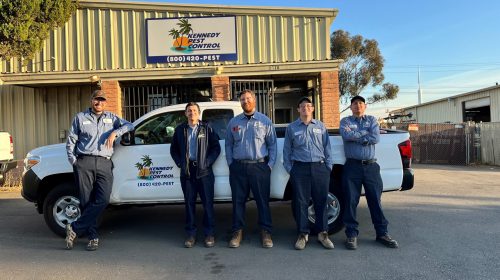
Kennedy Pest Control is a family-owned company that has been serving San Diego County since 1986. The company offers free inspections, one-time and bi-monthly pest control services, and a full range of termite treatment options, including spot treatment, heat treatment, fumigation, and repairs. BBB accredited with an A+ rating.
If you are ready to stop cycling through consumer products and start seeing lasting results, contact Kennedy Pest Control for a free inspection.